Tornyol (YC F25) · Hardware Engineering Intern · May to August 2026
20 A supercapacitor charger
- Charger IC
- TI BQ25820
- Input
- 24 V
- Designed for
- 7.6 V, 20 A
- Ran on the bench
- 20 A on 1S, 12 A on 2S
- Firmware
- STM32, over I2C
Supercapacitors store less energy than a LiPo but charge much faster, which suits a drone that keeps returning to a base station. Once the flight controller ran on supercapacitors, the drone needed a charger that could push a lot of current.
I designed it around TI's BQ25820: a 24 V input, a synchronous buck for constant-current then constant-voltage charging, and an op-amp midpoint balancer across the two cells. I started from TI's evaluation module and shrank it to a credit-card-size board.
- Designed for 7.6 V and 20 A, to charge a 2S pack.
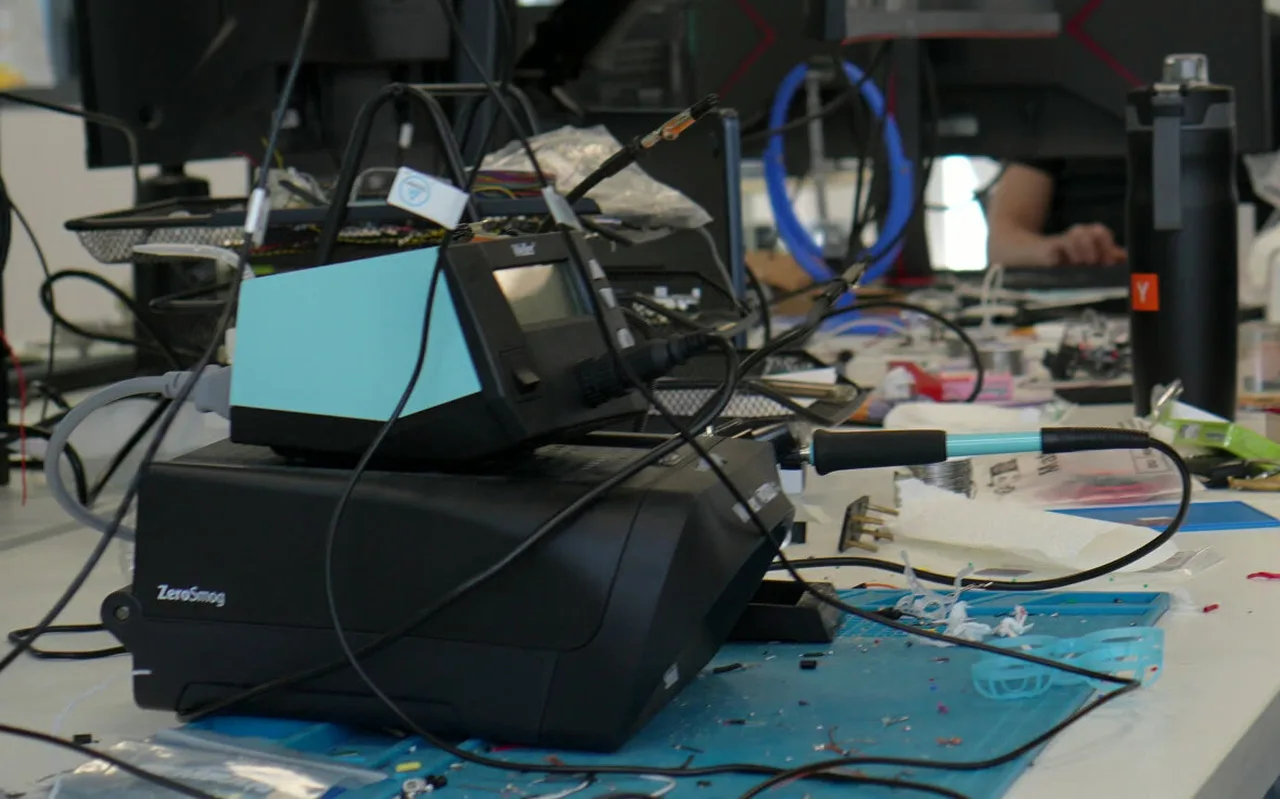
- On the bench: I confirmed CC/CV charging, ran 20 A on a 1S pack, and charged the 2S pack the drone flew at 12 A. I calibrated the BQ25820's current reading against a multimeter and checked heat with a thermal camera.
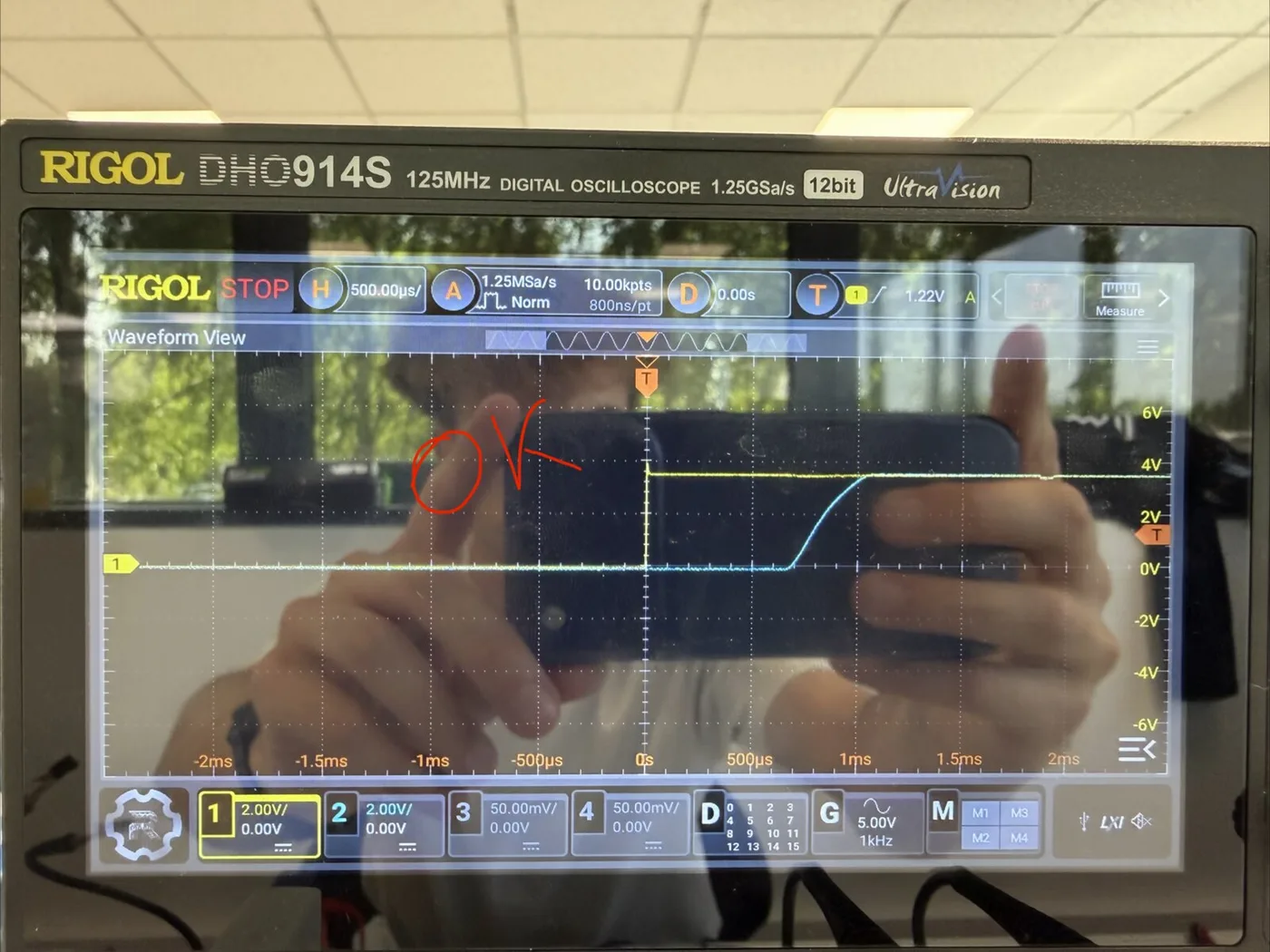
- Firmware: I wrote the STM32 bring-up firmware over I2C: register configuration, cell balancing and controlled charge voltage.
- Result: the drone went from 3 min of flight per 15 min of charge on LiHV to 90 s of flight per 90 s of charge.